Dare to Change Life Coaching & Mentoring

Tag: building wealth

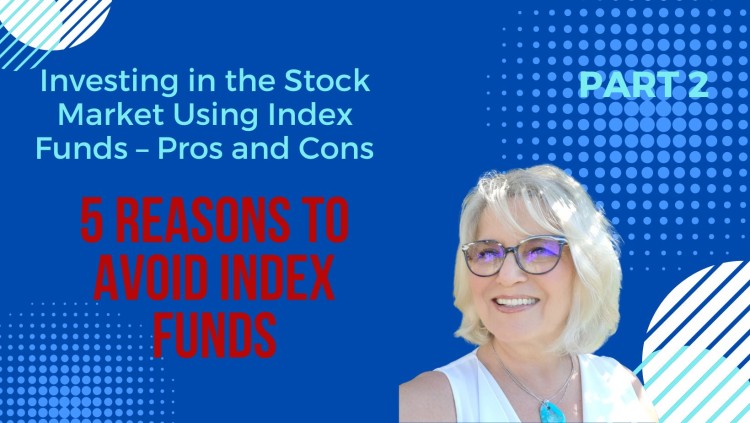
  • Investing in the Stock Market Using Index Funds – Pros and Cons – Part 2 5 Reasons To Avoid Index Funds

    Investing in the Stock Market Using Index Funds – Pros and Cons – Part 2 5 Reasons To Avoid Index Funds

    I see many money coaches promote investing in the Stock Market using Index Funds.

    As I shared with you in Part 1 of this articles’ series, the main reasons some people choose to invest using Index Funds are the ‘passive nature” and relatively low cost of this kind of investing.

    That’s why IRA and 401K accounts offer options to invest in index funds. If you missed Part 1 training in this series, you can also catch up with it on my Youtube channel Millen Livis Channel Wealth.

    While Index Fund investing has its merits if you want to take a broad and passive approach with your investment portfolio, there are many reasons (and I’ll share with you top 5 of them in this article) why it may NOT be the best way to achieve your investment goals.

    5 Reasons To Avoid Index Funds

    1. Lack of Downside Protection.

    Over the long term, the Stock Market has proved to be a great investment. However, ALL financial markets go through “bumps and bruises” periods. We’re witnessing a VERY bumpy phase in the Stock Markets right now.

    Investing in index funds, for example, in the fund  that tracks the S&P 500 index, will give you the upside when the market is going up, but it will leave you completely vulnerable to the downside when markets crush or go through correction.

    Remember, Index Funds are Mutual Funds and you cannot place a stop-loss order or a trailing stop order, which would trigger a sell of a stock to limit your losses on certain stock positions.

    In other words, limit orders do not apply to the trading of mutual funds. So, you kinda stuck with your Index Funds position unless you decide to sell it manually.

    2. Lack of Ability to Adjust Asset Allocation.

    Index investing does not allow for Asset Allocation adjustments.

    One of the risk management tools is not to invest in any specific stock position more than 5%.

    If a particular stock in a fund becomes overvalued, it actually starts to carry more weight in the index, increasing your portfolio exposure to that stock.

    So even if you have a clear idea of a stock that is overvalued or undervalued, if you invest through an index fund, you will not be able to adjust – no be able to act on your knowledge.

    3. No Control Over Index Fund Holdings

    Index Funds are creates as a basket of stocks that are included in some market indexes.

    When investors buy an index fund, they have no control over the individual stocks in the portfolio.

    You may have specific companies that you like and want to own, and other companies that you couldn’t care less about…

    For instance, you may dislike some companies in the Index fund for moral or other personal reasons.

    It could be issues with the way some companies treat the environment, or their employees, or the products they make.

    The components of index funds are out of your control.

    4. Limited Exposure to Different Strategies

    There are various strategies that you can use to invest in the Stock market.

    Unfortunately, buying an index fund doesn’t give you access to a lot of these strategies.

    Yes, Index Funds’ investing will give you diversification.

    But that can also be achieved with as few as 10-20 stocks, instead of the 500 stocks that the S&P 500 Index would track.

    If you do a bit of research yourself or subscribe to good investment research letters, you may be able to find the best value stocks, the best growth stocks and the best dividend-paying stocks, and use other investing strategies.

    And based on your research, you can combine your stocks into a smaller, more targeted portfolio, that is better positioned than the overall market, or one that’s better suited to your personal goals and risk tolerances.

    Because different investing strategies can be combined to provide investors with better risk-adjusted returns.

    5. Diminished Personal Satisfaction

    Frankly, investing can be worrisome and stressful, especially during the times of market turmoil like we experience right now.

    It’s true that selecting specific stocks may leave you constantly checking quotes, and can keep you awake at night…

    But investing in an index funds will not ease these worries.

    You can still find yourself constantly checking on the stock market and feeling worried about losing money.

    On top of this, you will diminish the satisfaction and excitement of making good investments and being successful with your money.

    The Bottom Line:

    • While Index investing is a popular investment strategy, there are reasons why some investors (myself including) might want to avoid index funds.
    • Although index funds may be low cost and diversified, they prevent seizing some great investment opportunities.
    • Finally, index fund investing does not provide protection from market corrections and crashes.

    In the next week’s article – the Part 3 of this series – I’ll talk about costs of investing using Index Funds.

    To your Health, Wealth, and Freedom!
    Millen Livis

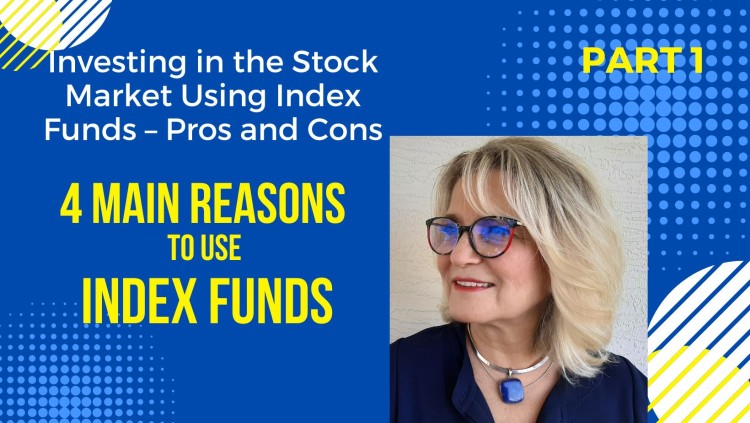
  • Investing in the Stock Market Using Index Funds – Pros and Cons – Part 1: 4 Main Reasons to Use Index funds

    Investing in the Stock Market Using Index Funds – Pros and Cons – Part 1: 4 Main Reasons to Use Index funds

    The other day, I saw an eye-catching Headline in the Wall Street Journal…“Index Funds Are the New Titans of Wall Street!”

    Are they, really?

    Well, many “financial coaches” teach “Index Funds’ Investing” as a “Passive Investing” Revolution in the stock market.

    If you ask me… I believe that EVERYTHING has a front and a back… Pros and Cons.

    In this and the next 3 articles, I am going to cover the good and the not so good of the “Investing in the Stock market Using Index funds” strategy.

    So, first of all, Investing in Index Funds is considered to be passive investing as opposed to Investing in Stocks, which is active investing.

    Even though Index Funds have a great success in the U.S. Stock Market, they still contribute to only 15% of total holdings. So, whatever you may think of them, Index Funds are not a dominant force of the stock market as a hole.

    But let’s start with defining what index funds are.

    Index funds are mutual funds that contain a basket of stocks or securities that track the components of an existing financial market index. For example, there are index funds that track the Standard & Poor’s 500 Index (referred to as S&P 500).

    Although investors can’t buy an index per se, they can invest in index funds that are designed to mirror the index.

    In other words, an index fund tracking the S&P 500 index, would have all 500 stocks from the S&P 500 in the fund.

    Therefore, index funds tend to provide investors with

    1. fairly broad market exposure,

    2. relatively low operating expenses, and

    3. usually low portfolio turnover (which helps decrease taxes on capital gains).

    So, basically, an average index fund investor is buying all of the S&P 500 companies or other market indices at a low cost.

    So far, so good, right?

    Now… For beginner investors, hands-off long-term investors, and those who don’t want to spend much time managing their investment portfolio, index funds offer a relatively low-risk way to gain exposure to a wide range of equities.

    People who have retirement accounts are likely to invest in index funds because they are considered “ideal holdings” for individual retirement accounts (IRAs) and 401(k) accounts.

    I’ve been asked whether index-only investors can lose everything.

    Frankly, I don’t think so, because this would entail that ALL stocks in an underlying index effectively go to zero, which is highly unlikely.

    As a matter of fact, the total book value of all the underlying stocks in an index fund is expected to increase over the long term.

    So, here are again, the 4 main reasons to use Index Funds to invest in the stock market:

    1.    Index funds offer broad exposure to stock market since they track particular market indices. In other words, Index fund investors are effectively buying all of the underlying index companies (e.g. S&P 500 companies).

    2.    Index funds’ Investors buy the companies in the underlying market indices at a lower cost than they would pay for actively managed mutual funds.

    3.    Index funds’ investing is considered a passive investing and they are suitable holdings for tax-deferred retirement accounts such as individual retirement accounts (IRAs) and 401(k) accounts.

    4.    Since Index funds have inherent diversification feature, index funds’ investors will not lose everything, even during the time of market corrections.

    That’s all for Part 1.

    Share it with people who could benefit from this information.

    In the next week’s article, I’ll talk about 5 Reasons To Avoid Index Funds.

    Until next time…stay blessed, stay in your power.

    To your health, Wealth, and Freedom.

    Millen Livis

  • How to Cultivate the Power of Clear Thinking to Unleash Your Financial Success

    How to Cultivate the Power of Clear Thinking to Unleash Your Financial Success

    In a world filled with constant financial choices (a.k.a. “shiny objects”), promising opportunities to satisfy our desires, and very little programming for self-discipline, developing clarity of thinking has become more crucial than ever before.

    So, let’s start with exploring why clarity is essential for financial wellbeing, how it shapes your financial decisions, and how to cultivate this empowering skill.

    PART 1: Significance of Clarity around your Money

    Clarity of thinking is the bedrock for building a solid foundation for your financial success.

    It allows you to gain a crystal-clear vision of your financial goals and develop a realistic path to reach them.

    Without clarity and common sense, you may stumble through life, struggle with living paycheck-to-paycheck, and worry about your financial future even though you make good money!

    One of my beautiful and smart clients, let’s call her Sarah, struggled with living paycheck-to-paycheck and constant money worries for years.

    She felt overwhelmed by snowballing debt that she and her husband accumulated after unfortunate circumstance, and was unable to make sound financial decisions, which led to jeopardizing her relationship and health (she develop several stress-related health conditions).

    It wasn’t until Sarah took the time to gain clarity about her financial goals and priorities that she was able to turn her situation around.

    With newfound clarity and sense of control over her money, she started mapping her money along different money buckets in alignment with her priorities and goals, diligently implementing this new intentional money management, and made informed investment decisions that propelled her towards desired financial security.

    Part 2: Clarity influences your financial Decision-Making process!

    When you have clear understanding of your financial goals, values, and priorities, you can make informed choices and decisions that are aligned with your long-term vision.

    Clarity enables Empowerment.

    Because it empowers you to cut through the shiny objects, the noise of market fluctuations and other external pressures, and enables you to make confident financial decisions.

    If you are a high-income earner yet live paycheck-to-paycheck for years and are not seeking support to help you change this situation, you’re lacking clarity of thinking.

    If you make good money and don’t have a strategic plan to become financially free, you’re lacking clarity of thinking.

    And if you’re counting and saving every penny yet feel like life is about surviving… instead of looking for solutions to change your money mindset and your money experiences, you’re lacking clarity of thinking.

    When I was experiencing my “dark night of the soul”, when I was divorced, deeply depressed and broke, I kept saying to myself “I am such a failure… I have great education, great experience, and great intentions and look at me now…”

    I was lacking Clear thinking. I felt stuck in unsupportive unhealthy thinking and was focused on my challenges and problems, instead of solutions. This thinking pattern led to downward spiral that literally brought me to my knees.…

    Fortunately, I was introduced to a coach, who helped me shift my thinking patterns and return to clear thinking.

    And THAT made all the difference for me. I became financially independent within 7 years!

    Sometimes we all need a little help and it’s ok… because it’s the outcome that matters. Right?

    Part 3: Cultivating Clarity of Thinking for Financial Success

    Let me be frank…

    Cultivating clarity of thinking in the realm of finance is a journey or a marathon, not a sprint, and it requires deliberate effort and self-reflection.

    Let’s explore practical steps to develop and nurture this invaluable skill that is essential for financial success.

    Step 1: Define Your Financial Goals.

    Take time to define your short-term and long-term financial goals. Be specific, measurable, and realistic.

    Clarify what financial success means to you personally, describe it by writing about it into your journal and get excited about your vision.

    Remember, Clarity enables empowerment.

    Step 2: Identify Your Values and Priorities.

    Reflect on your values and what truly matters to you.

    Align your financial decisions with your core values to create a meaningful and fulfilling financial path.

    Getting clarity about your values and priorities will save you time, headaches and regrets!

    Step 3: Educate Yourself.

    Gain knowledge and understanding about personal finance.

    Learn about intentional money management, strategic investing, investment risk management strategies, and wealth-building principles.

    Clarity is often born from a solid foundation of knowledge.

    Step 4: Create a Path to Financial Independence.

    Develop a detailed financial plan that encompasses your goals, your money mapping, your FFN (Financial Freedom Number) and your FFI (Financial Freedom Income), and investment strategies.

    A well-defined plan provides a path towards financial success and freedom.

    Step 5: Regularly Review and Adjust your plan.

    Have monthly “Money Dates”! J

    Review your financial progress and make necessary adjustments.

    Clarity evolves over time.

    Staying proactive allows you to align your choices and financial decisions with your changing goals and priorities.

    Here’s the bottom-line:

    Developing Clarity of Thinking in matters of finance is not just a luxury – it is the key skill to unleashing your financial success.

    By gaining Clarity about your Financial Goals, Values, and Priorities, you can make informed choices and aligned decisions, build a solid financial foundation, and create a future of financial security and abundance.

    Embrace the power of Clarity and you’ll notice the difference in your decision making and bank account.

    To your Clear Thinking, Health, Wealth and Freedom!🙏💖

    Millen Livis

  • ONE Skill You Must Have to Be Financially Successful

    ONE Skill You Must Have to Be Financially Successful

    Most people think that if they only had a lot of money, they will feel financially secure…

    NOT TRUE!

    HAVING money doesn’t mean you know what to DO with it.

    MANY high-income earners live paycheck-to-paycheck and are NOT financially free.

    During my complimentary money strategies sessions, I speak with a lot of women from all walks of life. And MANY successful high-income earners…live paycheck-to-paycheck and are not financially free!!

    And that’s not all.

    While over 63% of Americans are currently living paycheck-to-paycheck, many are now worried about safety of their money at the banks!

    NOW, more than EVER before, you’ve got to be financially savvy, so that you can make better financial decisions.

    We all wear many hats in life – parents’ hat, spouse hat, employee or entrepreneur hat, and… money manager hat – your money manager.

    Each “hat” you wear requires certain skillsets – like communication skills, parenting skills, specialized skills in your area of expertise as an employee or entrepreneur…

    Some skills are “nice to have” and some skills are necessary.

    And there is ONE particular skill that everyone – regardless of your education, type of work, your upbringing or your natural talents – must have to be financially successful.

    This skill is… Savvy money management.

    And since it’s such a foundational skill, it’s outrageous that it’s not taught at schools and colleges…

    You’ve got to be financially savvy!!

    You must know your numbers – what’s coming in and what’s coming out.

    You must have a healthy relationship with your money.

    Yep, you’ve got to know how to be intentional with your money – how to manage it, how to grow it and how to protect it.

    Whether you manage your retirement funds yourself (like I do) or outsource it to financial advisers, you’ve got to be an informed consumer!

    Money is like a game and, sadly, many people lose it before they even start….

    Financial ignorance is very expensive.

    Everybody wants to be financially free, yet most people don’t know HOW to WIN the Money game OR don’t believe it’s possible for THEM to be financially free… so, they don’t even start!!…

    And that’s where I come in…

    When I work with clients, I use the MILLENaire Method – my holistic system for becoming financially independent.

    This method addresses 4 areas of life that influence financial success the most: money mindset, money management, money investing, and… spirituality.

    This is the exact method that I used in my life to become financially independent in 7 years….

    Financial Freedom doesn’t happen by accident.

    You must have a clear intention, commitment and a plan.

    I was the least likely person to become financially free… was divorced, depressed, and broke… yet now I’m financially free for over 13 years and own homes in South Florida and in the South of France.

    And I can help you become financially savvy and grow your money with less stress and less risk, so that you too create your best rich life and never have to worry about money again.

    Message me privately if becoming financially independent is one of your “non-negotiable” goals.

    To your Health, wealth and Freedom!

    Millen Livis

  • Is Your Stock Portfolio Safe? Watch Out for CRE Fallout.

    Is Your Stock Portfolio Safe? Watch Out for CRE Fallout.

    Do you have your retirement investments in mutual funds, ETFs, or bond funds in your retirement accounts like 401Ks, IRAs, or pension funds?

    If so, keep on reading so that you get informed and prepare to adjust your investments, if needed!

    You may remember that the 2008 market crash was primarily caused by the collapse of the residential real estate market, specifically due to massive issuance of subprime mortgages and the subsequent default of those mortgages by borrowers.

    These defaults triggered a chain reaction throughout the financial system, causing widespread panic and eventually leading to a global recession.

    This time around, a possible recession will be caused by commercial real estate fallout… As businesses shut down or downsize their operations due to the high inflation, the demand for commercial real estate, especially, office space, is declining…

    While the 2008 crisis was caused by the residential real estate market, the current risks are mainly associated with the commercial real estate sector, which has been heavily impacted by high cost of money (aka inflation) and limited access to financing (fallout of smaller regional banks).

    While the latest rate of inflation is slightly lower than in the previous months, it’s still a long way to go down to the 2% that Federal Reserve targets as a goal.

    And high inflation can cause a major fallout among regional banks, as we’ve witnessed recently with several regional banks…

    Regional banks are typically more exposed to local economic conditions and industries, which makes them more vulnerable to the effects of inflation.

    National banks are larger and more diversified, with having operations across the country and even globally, which can provide some insulation from regional economic volatility.

    Now…

    Regional banks play a critical role in financing commercial real estate projects, particularly for small and medium-sized businesses.

    When regional banks experience losses or defaults, this can have several impacts on the commercial real estate market

    For example, Problems with Regional Banks cause:

    1.  Reduced Lending: Most commercial real estate holdings are heavily leveraged… Losses or defaults among regional banks can lead to a reduction in the amount of money that regional banks have available to lend to commercial real estate projects. (CRE).

     2.  Tighter Credit Standards: Banks already have tightened their credit standards in response to losses or defaults, making it more difficult for individuals and businesses to qualify for loans. This also causes a slowdown in the commercial real estate market (CRE), as businesses are unable to secure the financing they need to sustain or expand existing operations.

     3.  Increased Lending Interest Rates: Losses or defaults among regional banks can also lead to increase in interest rates for commercial real estate loans, as banks try to mitigate their risk. This can make it more expensive for businesses to borrow money, which can result in a slowdown in the CRE market.

     4.  Asset Write-Downs: When banks experience losses or defaults, they may be forced to write down the value of their assets, including their commercial real estate loans. This can result in a decline in the value of these loans on the bank’s balance sheet, which can impact their profitability and their ability to lend in the future.

    All of these factors related to instability among regional banks can contribute to a slowdown in the commercial real estate market, as businesses are less able to secure financing, and have to deal with higher interest rates.

    Why would YOU care about the potential commercial real estate fallout today and how it relates to your stock market investments via mutual funds, or ETFs (exchange-traded funds), or municipal funds, etc.?

    Here’s why…

    Commercial real estate fallout can trigger a recession and overall financial fallout because it plays a crucial role in the economy.

    The commercial real estate market is closely tied to many other sectors of the economy.

    A significant downturn in the commercial real estate market can have several damaging economic effects, like:

    Damaging effects of the CRE downturn:

    1.  Job Losses: The commercial real estate market provides jobs for construction workers, architects, engineers, property managers, and other professionals. These job losses can result in a reduction in consumer spending and a further slowdown in the economy.

    2.  Reduced Consumer Spending: When commercial properties like shopping malls, restaurants, and retail stores experience vacancies or closures, it can lead to a reduction in customers’ traffic and consumer spending in the surrounding areas. This can result in a slowdown in the broader retail sector and a further decrease in economic activity.

    3.  Further Credit Tightening: Losses in the commercial real estate market can also lead to further credit tightening, as banks become more cautious about lending money. This can make it more difficult for businesses to secure the financing they need…

    As you can see, the commercial real estate market is closely tied to the broader economy, and a significant downturn in this market can have several negative effects.

    These effects can lead to a recession, job losses, reduced consumer spending, credit tightening, and can impact your stock market investments, whether you’re invested via mutual funds, Exchange-traded funds (aka ETFs), index funds, municipal funds, bond funds, etc. in your retirement accounts (401K, IRAs, or pensions.)

    Ways You Can Protect Your Investments

    There are at least 5 ways you can protect your investments in mutual funds, ETFs, bonds, and index funds against a potential fallout in commercial real estate:

    1.  Diversify: One of the most effective ways to protect your investments against a downturn in commercial real estate is to diversify your investment portfolio. By investing in a variety of asset classes, such as value dividend-paying stocks, precious metals (gold & silver), and residential real estate investment trusts (REITs), you can spread your risk and reduce your exposure to any one market segment.

    2.  Avoid Concentration in Commercial Real Estate Funds: If you are concerned about the impact of a commercial real estate downturn on your investment portfolio (like I am), you may want to avoid investing in funds that are heavily focused on this commercial real estate sector.

    Instead, consider diversifying your holdings across different sectors, such as technology, healthcare, commodities, and consumer goods.

    3.  Know What You’re invested in and Monitor Your Investments: If you are invested in the stock market via Mutual Funds, ETFs, Index Funds, or Bond Funds in your retirement accounts or pensions, know what assets these financial instruments exposed to.

    Very often people have no idea what their mutual funds are investing in… If you work with a financial adviser, ask questions about the specific assets you’re invested in!

    It’s essential to keep a close eye on your investments and monitor any potential risks or red flags.

    Review the performance of your funds with your adviser and analyze their exposure to different sectors and asset classes, especially Commercial Real Estate (CRE).

    4.  Consider Low-Cost Index Funds or ETFs not related to CRE: Low-cost index funds and ETFs (Exchange Traded Funds) are popular investment options that provide broad market exposure while minimizing costs. These funds typically track benchmark indexes like a S&P 500, and also provide exposure to a diversified range of stocks across different sectors and industries.

     5.  Be a Strategic Investor:  Stay Invested for the Long TermStrategic investing is a long-term strategy, and short-term fluctuations in the market are to be expected.

    By staying invested for the long term, you can ride out market volatility and benefit from the compounding effects of long-term growth.

    Here’s the summary of what I shared with you today:

    In order to reduce your risk and achieve your long-term investment goals, you’ve got to protect your investments against a potential fallout in commercial real estate by creating a well-diversified portfolio, knowing what assets you’re invested in, monitoring your investments, and staying invested for the long term.

    Remember, financial ignorance is VERY expensive…  

    To Your Health, Wealth and FREEDOM!

    Millen Livis

  • NEW LLPA Fee Matrix for Loans –Unprecedented!

    NEW LLPA Fee Matrix for Loans –Unprecedented!

    Are you one of those people who act financially responsibly – save money to buy a home, pay your bills on time, keep your credit score in a healthy range?

    Then keep on reading!!

    Because a new regulation by the current administration, which goes LIVE on May 1st, 2023, may punish you instead of rewarding you for being a financially responsible adult…

    Mortgage borrowers with good credit will face higher costs under a new scheme from the federal mortgage associations Fannie Mae and Freddie Mac.

    And I doubt you’ll hear about this new regulation in mainstream media.

    In case you never heard about LLPA, it stands for Loan Level Price Adjustment Fee Matrix, which is an additional fee that lenders may charge on certain mortgage loans to offset the risks associated with those loans.

    LLPA traditionally were used to reward people with higher credit score loans with better interest rates because these borrowers present lower risks to lenders… they have a history of paying their bills…

    However, an unprecedented change to the LLPA fee matrix is to be enacted on May 1st, 2023.

    Under the new fee matrix, borrowers with high credit scores will face higher mortgage fees than before and those with lower credit scores will face lower fees!!

    In other words, if you’ve acted responsibly – were paying your bills on time, were not living beyond your means and have a fairly high credit score, you’ll be penalized by extra fees via the new LLPA.

    It’s shocking. It’s unprecedented. It’s a clear case of wealth redistribution.

    The good news is that the monthly fee increase in mortgage payments for most borrowers is not expected (for now) to be significantly higher.

    For instance, according to David Stevens, a former federal housing commissioner, someone with a $400,000 loan and a 6 percent mortgage rate may have to pay about $40 more per month.

    But an extra $40 per month means an extra $480 per year. And over the whole course of mortgage repayment, a homeowner would end up paying thousands of dollars more due to the fee shift.

    In my opinion, regardless of what the additional mortgage amount is in terms of actual costs, it’s unfair that borrowers with extremely good credit are effectively being penalized while borrowers with lower credit scores are being rewarded.

    And it doesn’t make any sense in terms of managing lenders’ risk!

    Because lenders will significantly cut the fees for their highest-risk borrowers and increase fees in much better credit quality buyers!!

    And while overall, lower-credit buyers will still pay more in LLPA fees than high-credit buyers, this latest change in the LLPA fee will give lower credit score / higher-risk borrowers a preferential treatment by enforcing higher-credit / lower risk borrowers to subsidy the them.

    Here’re some more specifics for you:

    Under the new LLPA rules, high-credit buyers with scores ranging from 680 to above 780 will see a spike in their mortgage costs – with applicants who place 15% to 20% down payment experiencing the biggest increase in fees….

    LLPAs are upfront fees based on factors such as a borrower’s credit score and the size of their down payment. The fees are typically converted into percentage points that alter the buyer’s mortgage rate.

    Under the revised LLPA pricing structure, a home buyer with a 740 FICO credit score and a 15% to 20% down payment will face a 1% surcharge – an increase of 0.750% compared to the old fee of just 0.250%….

    Meanwhile, buyers with credit scores of 679 or lower will have their fees slashed, resulting in more favorable mortgage rates.

    For example, a buyer with a 620 FICO credit score with a down payment of 5% or less gets a 1.75% fee discount instead of the old fee rate of 3.50% for that bracket.

    So, the penalty for having a credit score under 680 is now smaller than it used to be.

    While having a good credit score and putting more money for the down payment were strong factors that motivated people to act financially responsible, the government intention to “level the playing field” in the name of equity is decreasing this powerful reward for responsible behavior.

    With this being said, remember that your loan will still cost more if you have a lower credit score. 

    For instance, if you have a score of 659 and are borrowing 75% of the home’s value, you’ll pay a fee equal to 1.5% of the loan balance whereas you’d pay no fee if you had a 780+ credit score.

    But before these new LLPA changes, you would have paid a whopping 2.75% fee. On a hypothetical $300k loan, that’s a difference of $3,750 in closing costs.

    But that’s not all…

    Lenders can charge higher interest rates to high-credit borrowers yet pay these costs for you (but the costs are still there, and still technically being paid by you over time in the form of higher interest rates).

    Federal Housing Agency (FHA) Finance Director called it “another step to ensure that [Fannie Mae and Freddie Mac] advance their mission of facilitating equitable and sustainable access to homeownership.”

    So, what do you have to keep in mind if youre considering applying for a mortgage after May 1st, 2023, once the new Loan-Level Price Adjustment (LLPA) fees come into effect?

    Here’re a few things to keep in mind:

    1.   Shop around: It’s always a good idea to shop around for the best mortgage rates, and this is especially true now that LLPA fees are changing. Different lenders may have different fees and rates, so it’s worth exploring your options.

     2.   Improve your credit score: Unfortunately, if you have a good credit score, you may be subject to higher LLPA fees under the new rules. However, if you can improve your credit score before applying for a mortgage, you may be able to reduce the fees you’re charged.

     3.   Consider a larger down payment: Borrowers who can afford to make a larger down payment may be able to reduce the LLPA fees they’re charged.

    For example, under the new rules, high-credit buyers with scores ranging from 680 to above 780 who put down 15% to 20% will experience the biggest increase in fees, so if you can afford to put down more than 20%, you may be able to avoid some of these fees.

     4.   Be aware of the long-term costs: While the increase in fees may not lead to significantly higher monthly mortgage payments for most borrowers, it’s important to consider the long-term costs.  Because even a small increase in monthly payments can add up over the course of a 30-year mortgage.

    Overall, it’s important to carefully consider your options and understand the costs and fees associated with your mortgage before making a decision.

    Let me know in the comments what you think about this new LLPA adjustment – always love to hear your point of view!

    To your Health, Wealth and Freedom!

    Millen Livis