
Dare to Change Life Coaching & Mentoring

Tag: wealth

  • NEW LLPA Fee Matrix for Loans –Unprecedented!

    NEW LLPA Fee Matrix for Loans –Unprecedented!

    Are you one of those people who act financially responsibly – save money to buy a home, pay your bills on time, keep your credit score in a healthy range?

    Then keep on reading!!

    Because a new regulation by the current administration, which goes LIVE on May 1st, 2023, may punish you instead of rewarding you for being a financially responsible adult…

    Mortgage borrowers with good credit will face higher costs under a new scheme from the federal mortgage associations Fannie Mae and Freddie Mac.

    And I doubt you’ll hear about this new regulation in mainstream media.

    In case you never heard about LLPA, it stands for Loan Level Price Adjustment Fee Matrix, which is an additional fee that lenders may charge on certain mortgage loans to offset the risks associated with those loans.

    LLPA traditionally were used to reward people with higher credit score loans with better interest rates because these borrowers present lower risks to lenders… they have a history of paying their bills…

    However, an unprecedented change to the LLPA fee matrix is to be enacted on May 1st, 2023.

    Under the new fee matrix, borrowers with high credit scores will face higher mortgage fees than before and those with lower credit scores will face lower fees!!

    In other words, if you’ve acted responsibly – were paying your bills on time, were not living beyond your means and have a fairly high credit score, you’ll be penalized by extra fees via the new LLPA.

    It’s shocking. It’s unprecedented. It’s a clear case of wealth redistribution.

    The good news is that the monthly fee increase in mortgage payments for most borrowers is not expected (for now) to be significantly higher.

    For instance, according to David Stevens, a former federal housing commissioner, someone with a $400,000 loan and a 6 percent mortgage rate may have to pay about $40 more per month.

    But an extra $40 per month means an extra $480 per year. And over the whole course of mortgage repayment, a homeowner would end up paying thousands of dollars more due to the fee shift.

    In my opinion, regardless of what the additional mortgage amount is in terms of actual costs, it’s unfair that borrowers with extremely good credit are effectively being penalized while borrowers with lower credit scores are being rewarded.

    And it doesn’t make any sense in terms of managing lenders’ risk!

    Because lenders will significantly cut the fees for their highest-risk borrowers and increase fees in much better credit quality buyers!!

    And while overall, lower-credit buyers will still pay more in LLPA fees than high-credit buyers, this latest change in the LLPA fee will give lower credit score / higher-risk borrowers a preferential treatment by enforcing higher-credit / lower risk borrowers to subsidy the them.

    Here’re some more specifics for you:

    Under the new LLPA rules, high-credit buyers with scores ranging from 680 to above 780 will see a spike in their mortgage costs – with applicants who place 15% to 20% down payment experiencing the biggest increase in fees….

    LLPAs are upfront fees based on factors such as a borrower’s credit score and the size of their down payment. The fees are typically converted into percentage points that alter the buyer’s mortgage rate.

    Under the revised LLPA pricing structure, a home buyer with a 740 FICO credit score and a 15% to 20% down payment will face a 1% surcharge – an increase of 0.750% compared to the old fee of just 0.250%….

    Meanwhile, buyers with credit scores of 679 or lower will have their fees slashed, resulting in more favorable mortgage rates.

    For example, a buyer with a 620 FICO credit score with a down payment of 5% or less gets a 1.75% fee discount instead of the old fee rate of 3.50% for that bracket.

    So, the penalty for having a credit score under 680 is now smaller than it used to be.

    While having a good credit score and putting more money for the down payment were strong factors that motivated people to act financially responsible, the government intention to “level the playing field” in the name of equity is decreasing this powerful reward for responsible behavior.

    With this being said, remember that your loan will still cost more if you have a lower credit score. 

    For instance, if you have a score of 659 and are borrowing 75% of the home’s value, you’ll pay a fee equal to 1.5% of the loan balance whereas you’d pay no fee if you had a 780+ credit score.

    But before these new LLPA changes, you would have paid a whopping 2.75% fee. On a hypothetical $300k loan, that’s a difference of $3,750 in closing costs.

    But that’s not all…

    Lenders can charge higher interest rates to high-credit borrowers yet pay these costs for you (but the costs are still there, and still technically being paid by you over time in the form of higher interest rates).

    Federal Housing Agency (FHA) Finance Director called it “another step to ensure that [Fannie Mae and Freddie Mac] advance their mission of facilitating equitable and sustainable access to homeownership.”

    So, what do you have to keep in mind if youre considering applying for a mortgage after May 1st, 2023, once the new Loan-Level Price Adjustment (LLPA) fees come into effect?

    Here’re a few things to keep in mind:

    1.   Shop around: It’s always a good idea to shop around for the best mortgage rates, and this is especially true now that LLPA fees are changing. Different lenders may have different fees and rates, so it’s worth exploring your options.

     2.   Improve your credit score: Unfortunately, if you have a good credit score, you may be subject to higher LLPA fees under the new rules. However, if you can improve your credit score before applying for a mortgage, you may be able to reduce the fees you’re charged.

     3.   Consider a larger down payment: Borrowers who can afford to make a larger down payment may be able to reduce the LLPA fees they’re charged.

    For example, under the new rules, high-credit buyers with scores ranging from 680 to above 780 who put down 15% to 20% will experience the biggest increase in fees, so if you can afford to put down more than 20%, you may be able to avoid some of these fees.

     4.   Be aware of the long-term costs: While the increase in fees may not lead to significantly higher monthly mortgage payments for most borrowers, it’s important to consider the long-term costs.  Because even a small increase in monthly payments can add up over the course of a 30-year mortgage.

    Overall, it’s important to carefully consider your options and understand the costs and fees associated with your mortgage before making a decision.

    Let me know in the comments what you think about this new LLPA adjustment – always love to hear your point of view!

    To your Health, Wealth and Freedom!
    Millen Livis

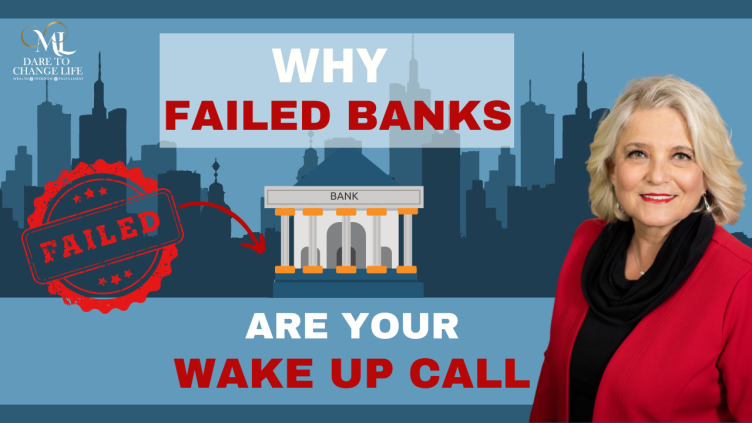
  • 🔥Why Banks’​ Failures Are Your Wake up Call

    🔥Why Banks’​ Failures Are Your Wake up Call

    Two major regional U.S. banks – the Silicon Valley Bank in California and Signature Bank in New York – collapsed a couple of weeks ago….

    Right away our government announced that it will NOT bailout the failed banks BUT that ALL banks’ customers can be assured that they will get their deposits back…..

    Not only those who are covered by the FDIC insurance (which has a max of $250K per each depositor), but also those with millions of dollars deposited to this bank, which were mostly wealthy elites, venture capitalists and Chinese companies (although, supposedly, only U.S. citizens can be insured by the FDIC insurance).

    If this is not a bailout, I don’t know what is…

    And in order to bailout failed banks, government has to come up with more money… which means more printing money, even higher national debt (according to the U.S. Treasury Department, the current national debt of the U.S. is $31.3 trillion, which translates to roughly $94,000 per citizen), even higher inflation, and lower purchasing power of U.S. dollar….

    Auch….

    Then last Monday stock shares of “rock-solid” Credit Suisse bank plunged and Swiss authorities helped cut a deal with its bigger rival, UBS, to acquire the troubled Credit Suisse bank at a marked-down price to calm the troubled financial markets and to re-instill investors’ trust in this “used-to-be” premier financial institutions….

    If you ask me, I don’t think these “superficial” government-arranged bailout-like actions can help restructure financial markets.

    Here’s why.

    As more facts started to come out about the Silicon Valley Bank’s operations and priorities, more and more people feel outraged with unconceivable incompetence and corruption of the SVB’s management and board of directors…

    They had less than 10% of deposits covered by banking insurance!

    Apparently, risk management was not SVB’s priority – its management didn’t have a director of risk management but had a director of equity and inclusion…

    They were donating millions of dollars to their preferred political supporters (from both political parties but mostly democrats), who were influencing financial laws and regulations.

    SVB didn’t have solid ethical and reliable operational guidelines….

    Senior managers dumped millions in SVB’s stock just a few weeks before its collapse…. BIG red flag!

    But that’s not all…

    In the lead-up to Silicon Valley Bank’s historic collapse in March this year, insiders at this California-based lender scooped up a record $219 million worth of personal loans (according to the Bloomberg News).

    Can you trust bankers with your money after such revelations??

    I cannot.

    And to be fair, NOT all regional banks are so corrupt and incompetent… but once you experience a rotten apple, it’s wise to be more careful and discerning.

    And there’re more reasons for you to be alarmed right now.

    Yesterday, the Fed (U.S. Federal Reserve) raised its key short-term interest rate by 0.25%, pushing ahead with its aggressive campaign to control inflation despite financial turmoil following Silicon Valley Bank’s collapse.

    This move will further constrain banks’ lending and weaken the economy.

    high Inflation + weak economy = stagflation

    There’s not sugarcoating the challenging times we’re in right now….

    But I am writing this NOT to stress you out but to wake you up and shake you out of complacency and status quo.

    It’s not the time to choose what’s convenient, or familiar, or comfortable.

    In the recent article about the banks failures, I shared the 5 Practical Lessons that will help you get well equipped to prepare for unexpected.

    These banks’ failures are a wakeup call….

    Be vigilant. Be observant. Be financially savvy.

    NOBODY cares about your money more than you do.

    And having money doesn’t make you good with money.

    You can see it by all the millionaires who were not managing their risk by having cash deposits that exceeded the required FDIC insurance amounts at the bank that was not managed responsibly (to say the least.)

    To your Health, Wealth and Freedom! 🙏💕

     Millen Livis

    P.S. let me know your insights from these banks’ failures…

    Are you going to make some adjustments to the way you manage your savings?

  • 5 Lessons from the Silicon Valley Bank’s Failure

    5 Lessons from the Silicon Valley Bank’s Failure

    Two major regional U.S. banks – the Silicon Valley Bank in California and Signature Bank in New York – collapsed last week.

    Silicon Valley Bank (referred to as S.V.B.), was considered by many tech start-ups and investment firms as their “reliable banking partner.”

    The bank was known for betting on start-ups that no other banks would touch (red flag?)…

    Some tech start-up founders and workers had gotten their first business loans and even home mortgages and car loans from the S.V.B.

    Many venture capitalists set up their accounts at Silicon Valley Bank in 1980s, when the tech industry boom started.

    So, what happened?

    How could this established bank with its “pristine-reputation”, who housed money for some of the richest investors and well-known venture capitalists, collapse?

    There were several reasons for this fiasco, of course….

    And what’s interesting, the main cause of the S.V.B. failure was not investing in risky cryptocurrencies or any other elaborate financial schemes….

    In my opinion, some of the main causes of this bank’s failure were a series of BAD tactical and ill-informed strategic decisions….

    In short, staggering incompetence of the bank’s management.

    As you know, 2021 was a year of booming stock market, fueled by record-low interest rates….

    Cost of money was so chip that numerous tech start-ups were popping up like mushrooms during a good rain season.

    So, the S.V.B. was taking cash deposits from its tech start-up customers and was investing this money into various long-term, low-yielding Treasury bonds that were purchased before interest rates began to spike in 2022….

    At the time, those investments looked safe…because interest rates were historically low.

    However, these investments became increasingly risky once interest rates rose in 2022 and the Treasury bonds lost their value (because bonds’ prices go down when interest rates go up).

    S.V.B’s “banking geniuses” should have known that out-of-control government spending and constant money printing will lead to high inflation… and high inflation will crash bonds’ prices…

    And since the cost of capital became more expensive, many tech start-ups needed to pull their cash deposits out of the bank to pay for their expenses… and S.V.B. had to sell some of its bonds at a loss to meet its obligations.

    But there is more to this story….

    While S.V.B. was a relatively small regional bank (the 16th-largest bank in the country), it’s fair to say that it had a preferred-bank reputation in the tech community of the Silicon Valley…because of its risk-off attitude towards its operation.

    Here’s what I mean by “risk-off” attitude: Out of Silicon Valley Bank’s $173.2 billion in deposits, only $21.7 billion was insured!

    In other words, over 87% of the S.V.B’s customers, who deposited their money into this bank, were risking not getting their money back!

    Apparently, regional banks have looser “bank solvency requirement” than bigger national banks…

    Anyhow, the S.V.B. customers and investors panicked and the bank’s shares plunged more than 60% last Thursday, then another 60% last Friday, then banking regulators stepped in and took over SVB Financial.

    Then last Sunday another bank was taken over by federal bank regulators – Signature Bank in New York.

    Now Moody, which is financial credit ratings firm, cut its outlook for the entire US banking sector and placed six US banks on review for potential credit rating downgrades, in the wake of Silicon Valley Bank collapse.

    Moody warns consumers that more banks will come under pressure after SVB’s failure — particularly those with large amounts of uninsured deposits and long-term Treasury bonds that have crumbled in value.

    Further, Moody’s said it expects pressure on the banking sector to persist as the Fed continues to hike interest rates to combat inflation.

    So, here’re some of the lessons YOU can learn from this S.V.B failure story:

    1. Be Mindful of the Interest Rates Trend. Many corporate clients (especially tech start-ups) are very sensitive to high cost of capital (like what we have right now – rising interest rates). When interest rates rise, long-term Treasury bonds lose value…Therefore, make sure you don’t invest your cash in long-term bonds that will lose value when interest rates rise.

    2. Be careful with keeping all your money with regional banks. It appears that larger national banks have more strict banking regulations and liquidity requirements than regional banks.

    3. Make sure your cash deposits and banking products like CDs are FDIC-insured. FDIC is Federal Deposit Insurance Corporation, which guarantees safety of your bank deposits up to $250,000 per person or per banking product. That’s why people who have more than $250,000in cash have accounts with different banks…

    Not all financial institutions are insured by the FDIC (e.g. credit unions don’t offer FDIC insurance).

    Always make sure that your money deposit is covered by the FDIC.

    If your money is kept with an FDIC-insured bank, you’ll at least be guaranteed to protect your principal up to $250,000.

    So, even if you have more at the bank, you’ll at least get reimbursed up to that limit.

    Generally, there’s no maximum amount you can have on a checking account.

    However, there’s a limit on how much of your checking account balance is covered by the FDIC (as of now, it’s $250,000 per depositor, per financial product, per financial institution).

    4. Become Financially Savvy. Consider Alternative places to put your money to. While FDIC protection for cash deposits makes banks look appealing in difficult times, consider alternative places to put your money to.

    You may consider

    – real estate investments that produce income… but can be more risky AND

    – precious metals like gold, silver and platinum, which offer NO income but a hedge (aka protection) against devaluation of your fiat money AND

    – dividend paying established undervalued stocks

    Remember that NOTHING is guaranteed in this world, NOBODY cares more about your money than you, and it’s your responsibility to be a SAVVY manager of your money.

    5. Do Risk / Return analysis. While all investments involve risk, some carry higher risk than others…  and provide higher return… and some investments are high risk and low return….

    So, when you invest, be very clear about the risk you’re willing and NOT willing to take …

    Diversify your investments across different assets to reduce your risk and maximize your return.

    For example, remember that the following financial products are NOT insured:

    •  Stocks
    • Bonds
    • ETFs
    • Mutual funds
    • Crypto currencies
    • Life insurance policies
    • Annuities
    • Municipal securities
    • Safe deposit boxes or their contents

    Let me know your top 3 insights from reading this article.

    What actions are you planning to take to protect your savings and investments?

    To your Health, Wealth, and Freedom!

    Millen Livis

  • Odd Holiday Message

    Odd Holiday Message

    Decide to change your financial reality, become confident and competent with money by learning how to align your mind with your desires, how to manage and invest your money

    I believe you’re reading this because you’re not where you want to be financially in your life.

    Because there’s a gap between your aspirations and your current financial reality.

    Yes?

    And I also suspect you have tried to change your financial situation before. Probably a few times….

    Tight budgeting? Done.

    Money mindset program(s)? Done.

    Dabbling with stock investing? Done.

    Investing in your own business? Done.

    You may feel like you’ve tried so many things already yet without a dent in your bank account’s balance, let alone an improvement in your financial new worth.

    Does it sound a little like you or someone you know?

    You’re so not alone!

    I certainly can relate…

    It was December 2008… I was sitting in front of my computer in my small rental apartment…after massive losses in my investment business, car accident, divorce…

    Feeling hurt, scared and overwhelmed, looking at my bank account balance (after paying the divorce attorney)…and thinking:

    “How the hell did I get here? How did I get to this financial mess?? And is there a way out from here?

    Well, I now know that the answer is an unequivocal YES!

    I just couldn’t see things clearly at that time – I was too close to my troubles, really stressed and focused on what wasn’t working in my life (which felt like EVERYTHING during that time).

    Look…whatever your financial situation may be right now, it’s NOT the end of your life story. It’s just a chapter and…likely, a wake-up call.

    There is always a way out and way forward if you choose to make real change, instead of ignoring the need for change by putting another Band-aid on the situation…

    Change is not something that most people seek or welcome when there is not enough “pain.”

    Change is often uncomfortable, unpredictable, and even scary (because it’s unknown).

    And it seems that human nature is such that we delay/avoid/ignore a need for changes in our lives until things get really ugly.

    Until we get so uncomfortable/hurt/disturbed that we can no longer go on with businesses as usual.

    Why am I talking to you today, during the holiday season, about the real change?

    Because I see too often that people wait…and wait…and wait until they lose their health, relationship, money, hope…

    Because this is the time of the year (Hanukkah, Christmas, New Year) to MAKE TIME and reflect on your life experiences.

    It’s the time of the year to make plans and contemplate what you want to let go of, what you want to have more of, and what you want to accomplish next year…

    So, I encourage your to MAKE TIME for yourself, print and use my Wealth Planner (click HERE to download it right now) and really immerse yourself into  “your mind’s journey” that this Wealth Planner takes you on.

    Create a BIG picture for your journey to Financial Independence:

    1. Start with WHAT you want to create/experience;
    2. Dig out the skills and experiences you already have and those you may need to upgrade/acquire;
    3. Outline money habits you’ve got to change, old thinking patterns that must stop and the new ones you want to practice more;
    4. Assess your environment and inner circle (what/who do you want to keep and what/who to let go?);
    5. Decide what changes you want to see in your physical and emotional body.

    If you feel like “I know it already”, consider that this Wealth Planner is a tool to “re-mind” your old conditioned mind so that you allow yourself to snap from  “survival” or “just enough” state and leap to elegant joyful State of Creation.

    So, yeah, this is my “odd holiday message” to you.

    Let me know how it lands on you. What resonated? What frustrated? What inspired?

    To your Peace, Power and Prosperity!

    P. S. Some REALLY cool Wealth trainings are coming your way in 2020. But I have something SPECIAL FOR YOU RIGHT NOW! 

    Something that would help you JUMP START Your Investing Journey OR RE-CALIBRATE it for better RESULTS.

    I am talking about The Wealth Collection Holidays’ Special – a bundle of my most transformational and insightful programs that focus on helping you make your money work for you. 

    AND you can own LIFETIME access to these programs with the incredible 70% OFF (SAVING $700) if you ACT by January 1, 2020! 

    Wanna look what’s inside?

    Check it out here: 
    WEALTH COLLECTION HOLIDAYS’ SPECIAL

  • 7 Steps to Regain Control Over Your Money: Step #7 – Be strategic with your money

    7 Steps to Regain Control Over Your Money: Step #7 – Be strategic with your money

    You work hard for your money – whether you are an employee or a business owner – you want to make more money. Right?

    Well, how about managing your money strategically so that your money works for you and your family?!

    That’s what Step 7 is about – BEING STRATEGIC with your money!

    Here are some aspects of being strategic:

    1. Diversify your investments to maximize your results.

    If you want to be a good investor you’ve got to know how to manage risk because ANY investment entails risk.

    And diversification is one of the most important risk strategies.

    When it comes to managing risk to maximize your return, it pays to diversify.

    First, you can diversify among the four major asset classes: cash, stocks, bonds and real estate.

    Once you decide on the amounts to allocate to these four main investment classes, it is important to diversify within each asset.

    This means buying multiple stocks within a variety of industries, holding bonds of varying maturities, having different real estate properties in different locations.

    In other words, don’t put all your golden eggs in one basket.

    Also, don’t make the mistake of putting most or all of your money in “safe” investments like savings accounts, CDs and money market funds.

    Over the long term, inflation and taxes will “eat up” the purchasing power of your money in these “safe investments”.

    All investments involve some trade-off between risk and return.

    Diversification reduces unnecessary risk by spreading your money among a variety of investments.

    Besides diversification, the single most effective investment strategy is to invest continuously over time, with a long-term perspective.


    2. Grow your money by taking advantage Of tax-deferred Investments.

    If your employer has a tax-deferred investment plan like a 401(k) or 403(b), use it!

    Often, employers will match your investment.

    And even if they don’t, no taxes are due on your contributions or earnings until you retire and begin withdrawing the funds.

    Tax-deferred savings mean that your investments can grow much faster than they would otherwise.

    The same logic applies to IRAs, although the maximum amount you can invest annually in an IRA is substantially less than what you can put in a 401(k) or 403(b).


    3. Use the protection provided by insurance

    It’s wise to protect yourself, your family and your money by having an adequate insurance coverage.

    A major lawsuit, unexpected illness or accident can be financially devastating if you lack proper insurance.

    The key to insurance is to cover only financial losses so large that you could not cope with them and remain financially fit.

    If someone is dependent on your income, you must have adequate life insurance.

    Long-term disability coverage is important as long as you need employment income.

    Also, be sure to carry adequate liability coverage on your home and auto policies.

    To save on annual premiums, you may choose to raise your insurance deductible.

    And whenever you purchase insurance – life, home, disability, or auto – be sure to shop around, and buy only from a reputable firm that has a history of being solvent and paying insurance claims.


    4. Plan your financial legacy

    You want to have a will to ensure that your funds, property and personal items will be distributed according to your wishes.

    A will is a legal document that ensures that your assets will be given to family members or other beneficiaries you choose.

    Having a will is especially important if you have young children because it gives you the opportunity to assign a guardian for them in the event of your death.

    Although wills are simple to create, about half of all Americans die without a will.

    With no will to indicate your wishes, the court steps in and distributes your funds and property according to the laws of your state.

    To prepare a will, take an inventory of your assets, outline your objectives and determine to which friends and family you wish to pass your possessions to.

    Then, when drafting a will, be sure to include a name of a guardian for your children, name of an executor, and an alternate beneficiary.  

    Once your will is drafted, you won’t have to think about it again unless your wishes or your financial situation change substantially.

    And that’s a wrap for the mini-class series “7 Steps to Regain Control Over Your Money.”

    Share your insights and questions in the comments!

    To your Health, Wealth and Freedom

    P.S. Join me for a game-changing training – Financial Freedom Game Plan Masterclass. No credit card required! Reserve your spot HERE:

    http://daretochangelife.com/financial-freedom-gameplan/


  • 7 Steps to Regain Control Over Your Money: Step #6 – Shop Smart

    7 Steps to Regain Control Over Your Money: Step #6 – Shop Smart

    Women shop differently than men. In general, women tend to love shopping and many see it as an entertaining activity. They are more likely to make impulsive purchases and often take advantage of special offers.

    Men mostly buy just what they need right now – they go with a clear idea of what they are looking for and try to spend as little time as possible.

    Can you relate?

    In order to spend less and save more, especially as a woman, you’ve got to become a savvy shopper. It’s not difficult. And the tips that I’m going to share with you here will help you buy what you need, spend less and save more. That’s what I call smart shopping.  

    You can save substantial amounts of cash when you become intentional shopper as opposed to emotional shopper.  

    Ready?  

    Here are EIGHT TIPS for SAVVY SHOPPING:

    1. Plan your purchases in advance

    Plan your purchase. Pause and get really clear about: Why do you need it? Where will you put it? What will you use it for? Who will use it?

    If you don’t have compelling answers to these questions you will realize that you don’t really need to buy it at this time.

    If you feel strong about your decision to buy the item, plan the day to go shopping and enjoy the fact that you made an intentional decision to buy it, not an impulsive one.

    2. Have a budget for your purchase

    Have an approximate amount that you intend to spend on this purchase. This will help you be intentional about the amount you’re willing to pay and not get carried away with whatever price you see on the label.

    Does it require some financial discipline? Yes. And it’s a good habit to have if you want to be a Wealth Builder instead of Wealth Consumer.

    3. Pay in full (cash or debit card)

    When you are in a store and you see something that you really want or need, it’s easy to pull out a credit card and pay whatever the price may be.

    However, if you are using cash or a debit card to purchase the item, you’ll have more awareness about the price that you’re about to pay because your amount is limited by the cash in your wallet or by the amount in your bank account.

    4. Buy older iterations of products  

    Retail price of the latest version of a product is always higher than the previous years model, whether it’s a phone, a TV or a car.While the newer version may have more features, you’re paying a premium price for these new features if you buy the product on release-day.

    The same model will be priced significantly lower in just a year or two, so waiting a little longer can be quite lucrative. You may save hundreds or even thousands when you weigh the benefits of saving money on buying a good, but not the latest model of the product.

    5. Shop for clothing during the end-season

    You like to look like a “million bucks”? Great! And it doesn’t have to cost you that much! You can find significant markdowns on clothing prices—50% or more—during the end of the season for clothes. 

    Retailers cut prices to get rid of things that are going out of season. It may worth your money to wait a few months to buy clothes you like at prices your wallet will love!

    6. Don’t be fooled by marketing

    Stores are designed to entice you to spend money. Their strategies are subtle and effective. 

    Most use different lighting effects, colors, music, and items displayed in a certain way to entice you into buying more than you intended to when you came to the store. The same applies to online shopping – additional items are suggested to you when you buy anything.

    Don’t fall for any of it. Be clear about what you came to the store to buy so you won’t get dazzled into overspending or buying something you didn’t plan for.

    Buy quality items that are offered at discounted price but only if you need and want them, not simply because of the decreased price.

    Finally, remember that sales people are trained to make you buy! It’s a good idea to ask questions about products, but don’t let them persuade you into buying it there and then. Take your time to make measured decisions.

    7. Negotiate

    Very few people realize that you can negotiate many products’ prices with a seller!

    Let’s say, you have decided on an item you want. You have found the best price, you chose your timing right, and you are ready to pay for it.

    But wait! Always ask for “the best possible price” wherever you are or whatever you are buying. What is the worst that can happen?

    Sometimes when the seller cannot offer any additional discount on the product, you may get a discount on a service or another item that you need to buy too! Negotiation is a great skill that you can develop and practice when you shop!

    8. Be mindful of timing when you travel

    Prices on hotels, vacation rentals, airfare, and even rental cars are often much higher during certain days of the week, school and college breaks, and national holidays.

    The travel industry knows that most people like to leave for vacation on Fridays and come back on Sundays. That’s why these days the prices on airfare, vacation rentals and hotels are higher.  

    Be smart and adjust your travel timeline so that you get a better deal. Shop around for plane tickets to fly out on Tuesday, Wednesday, Thursday, or Saturday to take advantage of lower prices.  

    Also, the plane tickets usually cost less when bought in advance – plan your air travel in advance. Do price comparison for your favorite travel destinations to reduce your travel expenses further.

    The Bottom Line: From shopping for groceries to shopping for a weekend getaway, spending money is a side effect of shopping (Get savvy about it!

    Next time you’re browsing in a store or online, think about these 8 tips to be a savvy shopper.

    To your Health, Wealth and Freedom!

    P.S. Have you registered yet for my brand new training – Unpack Your Debt?

    This is a 5-day LIVE bootcamp where I’ll share the TRUTH about DEBT and show you the WAY OUT. 

    You can access this LIVE training FREE if you register before February 25th! Click HERE to Register NOW